
Popsicle bridge
Amenities
No parking, no amenities.
History
In the 1920s, a tall trestle bridge was built across Sand Creek to provide early residents of north Sandpoint easier access to Highway 95 and Kootenai. The High Bridge did not last long, however, and quickly became unmanageable with repairs. Instead of fixing the High Bridge, it was more economically appropriate to rebuild. About 275 feet north of the High Bridge, a lower and shorter bridge was built. This new bridge would come to be known by several different names throughout its service, such as North Boyer Bridge, County Low Bridge, and the Popsicle Bridge.
During highway reconstruction in the early 1970s, the creek crossing was rerouted and the bridge was condemned, but thanks to North Idaho Bikeways, was not lost. This nonprofit organization advocates for safe cycling. In 1998 they started fundraising to rebuild the bridge for bike and pedestrian traffic as part of a comprehensive new bike path from Sandpoint to Dover. The US Forest Service donated concrete, and the US Army Corps of Engineers and the Idaho Department of Lands yielded permit application fees.
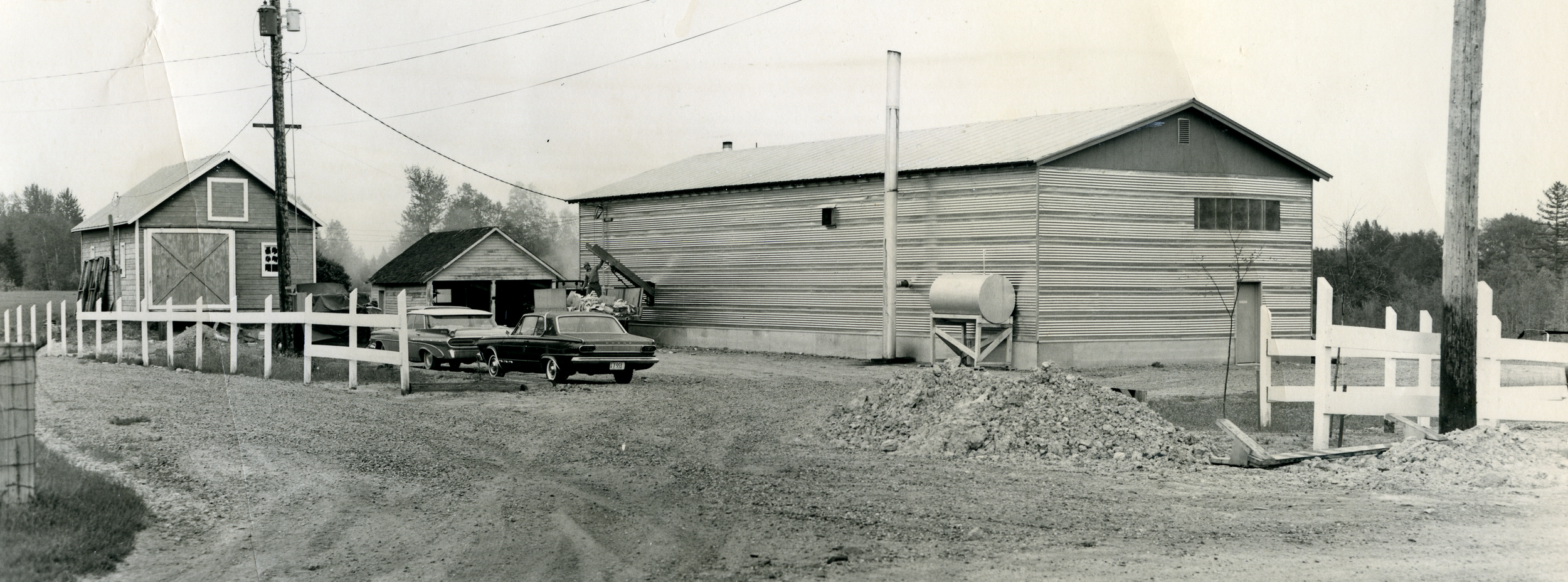
The bridge is now known as the Popsicle Bridge due to the popsicle stick factory that used to be located nearby. In the mid-1960s, father and son Laurin and Gary Pietsch partnered with mechanical engineer Bert Satterlee to build a birch plywood product factory that made popsicle sticks, among other products.
They chose to use birch because it could withstand the pressure of being treated, and had a mild scent that would not interfere with the taste of popsicles. Satterlee designed all the machinery specifically for the process of making birch plywood. The plant employed 20 workers, and the goal was to make one million popsicle sticks per day. At the time it was the only manufacturer of stamped hardwood veneer products in the West. Unfortunately, the firm closed in 1969, but its legacy lives on through the bridge that still stands today.
Get directions:
Additional Information
The Popsicle-Stick Bridge
M Love, Slight Detour — April 3, 2015.
Popsicle Bridge receives makeover
Evie Seaberg, Bonner County Daily Bee — March 8, 2024.
Wonderful Waters
Cate Huisman, Sandpoint Magazine — Summer 2024.
Sand Creek
Visit Sandpoint — publication date and individual author not listed.
Please be aware that parking at this location is limited and the area is primarily residential.
Please respect the surrounding neighborhood by parking responsibly, keeping noise to a minimum, and being considerate of residents while recreating along this corridor.