
Mud hole
Amenities
Campground with boat ramp, swim beach, parking, bathrooms, and boat-in access.
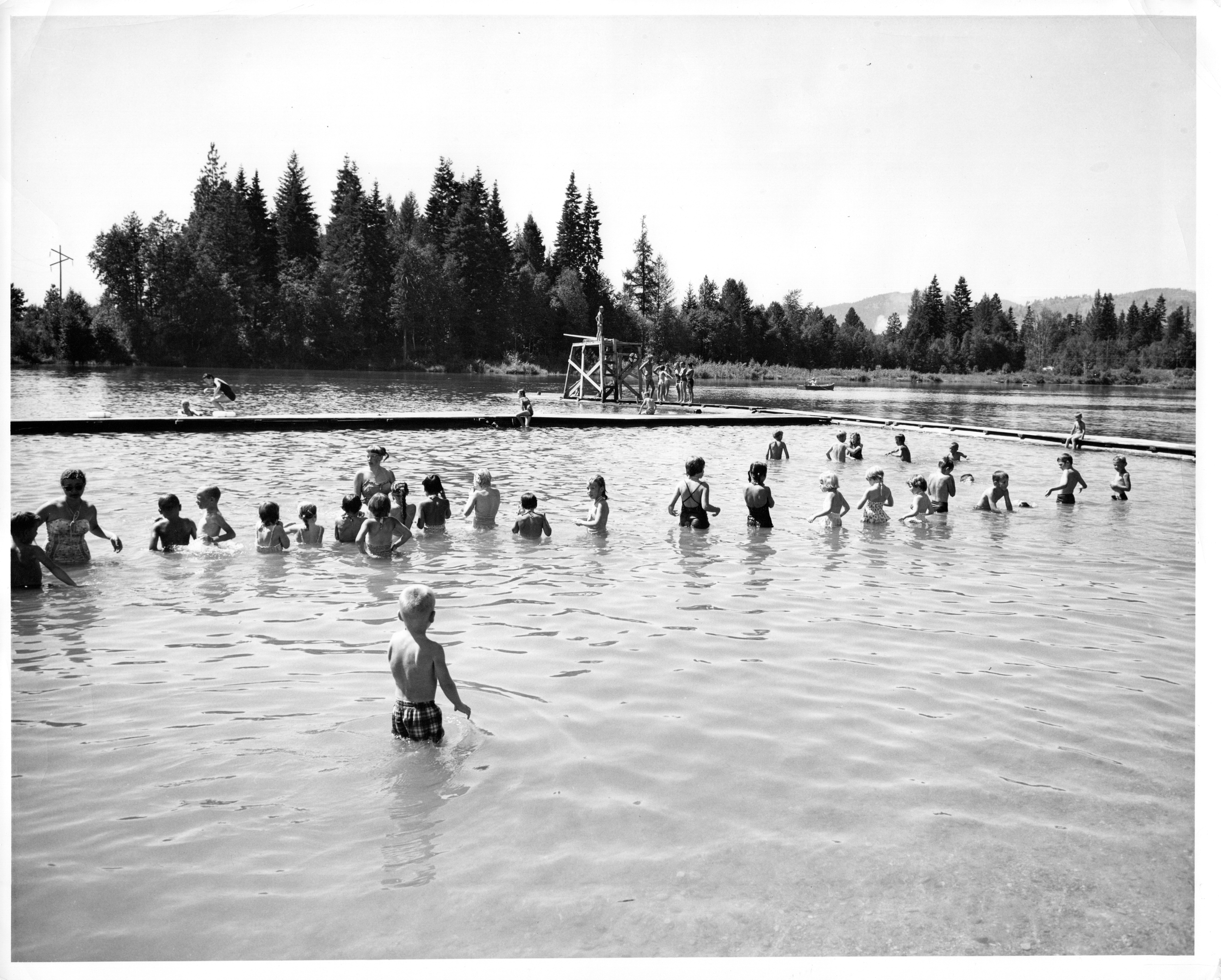
History
The Priest River Campground has been nicknamed the Mud Hole for decades. The Army Corps of Engineers began managing it after ownership was transferred to the United States sometime between 1939 and 1960.
The land was privately owned by lumber workers prior to this, and since it sits at the juncture of Priest River and the Pend Oreille River, it flooded yearly during the spring thaw. A former owner reported that “every spring when the river flooded they would have a foot or more of water in the house and walk to bed in galoshes. My mom's sister was so little they carried her through the water to her bed. As the water receded they had to scrape the mud off the walls and shovel and wash the mud out of the house.”
The same owner reported that her Uncle Jack, who lived on the Mud Hole property, was a “river pig” who worked the spring log drive. The vast forests of the area held enormous timber wealth, but getting logs to market required sending them down various local rivers, a process that was both complex and dangerous. Logs frequently snagged on rocks, river bends, or the riverbed, and a single obstruction could quickly grow into a massive logjam. The hazardous work of keeping the logs moving fell to skilled log drivers known as river pigs, who filled distinct roles clearing jams, freeing stuck logs, and searching for trouble along the route. Equipped with spiked boots and long poles, these men balanced and maneuvered across rolling logs with remarkable grace, often described as “waltzing” on the water. Despite the ever-present risk of drowning or being crushed, river pigs were essential to the success of the area’s lumber industry.
The Mud Hole parcel shrunk when water rose behind Albeni Falls Dam, and the flooding was minimized.
Get directions:
Additional Information
Priest River Recreation Area U.S. Army Corps of Engineers, Albeni Falls Dam
Paving to Begin Soon at ‘The Mudhole’ Bonner County Daily Bee — March 29, 2024
Priest River Campground Recreation.gov — date not listed
Spring 2025 Newsletter Pend Oreille Rowing & Paddling Association (PORPA) — Spring 2025