
Historic Concrete Beach
Amenities
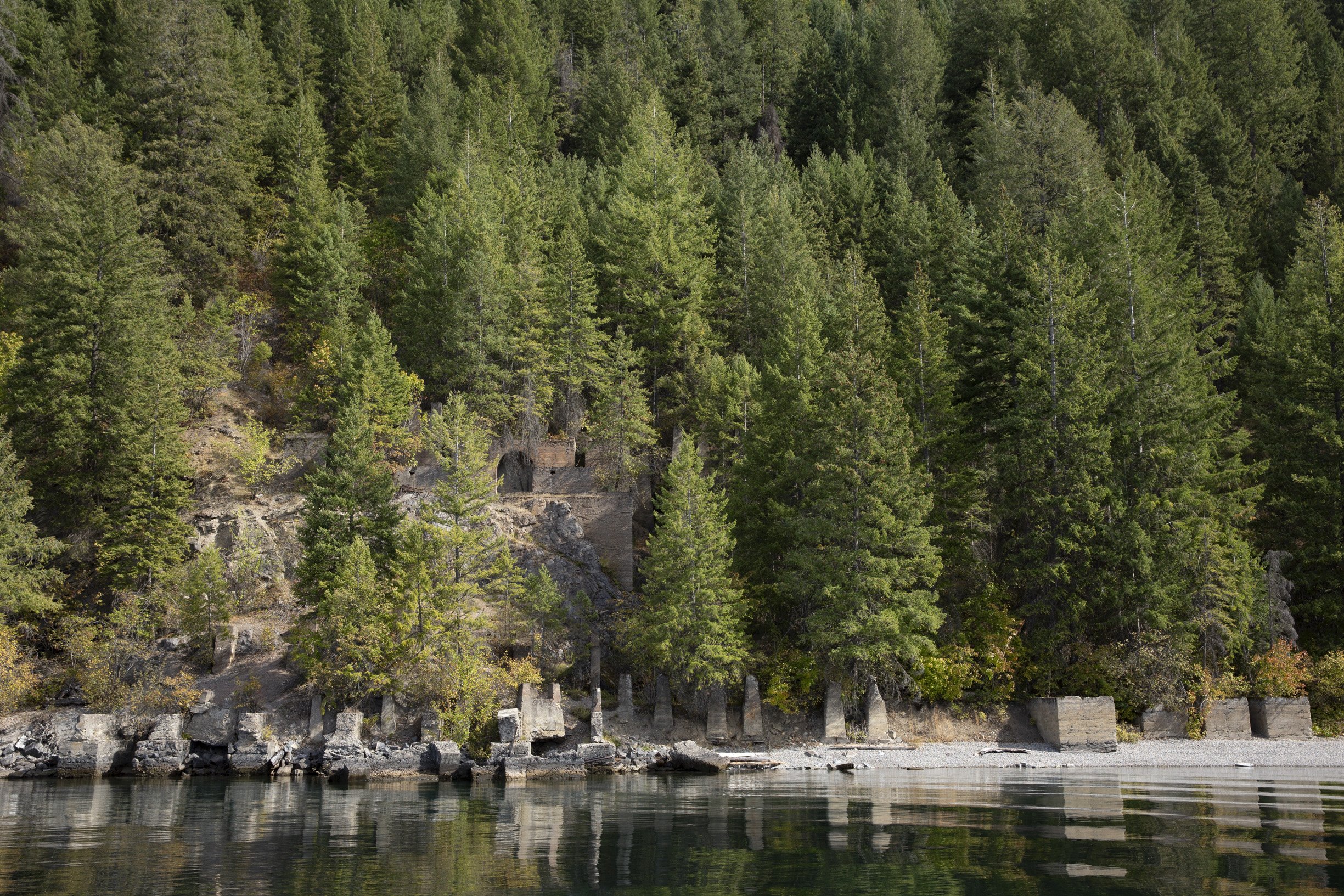
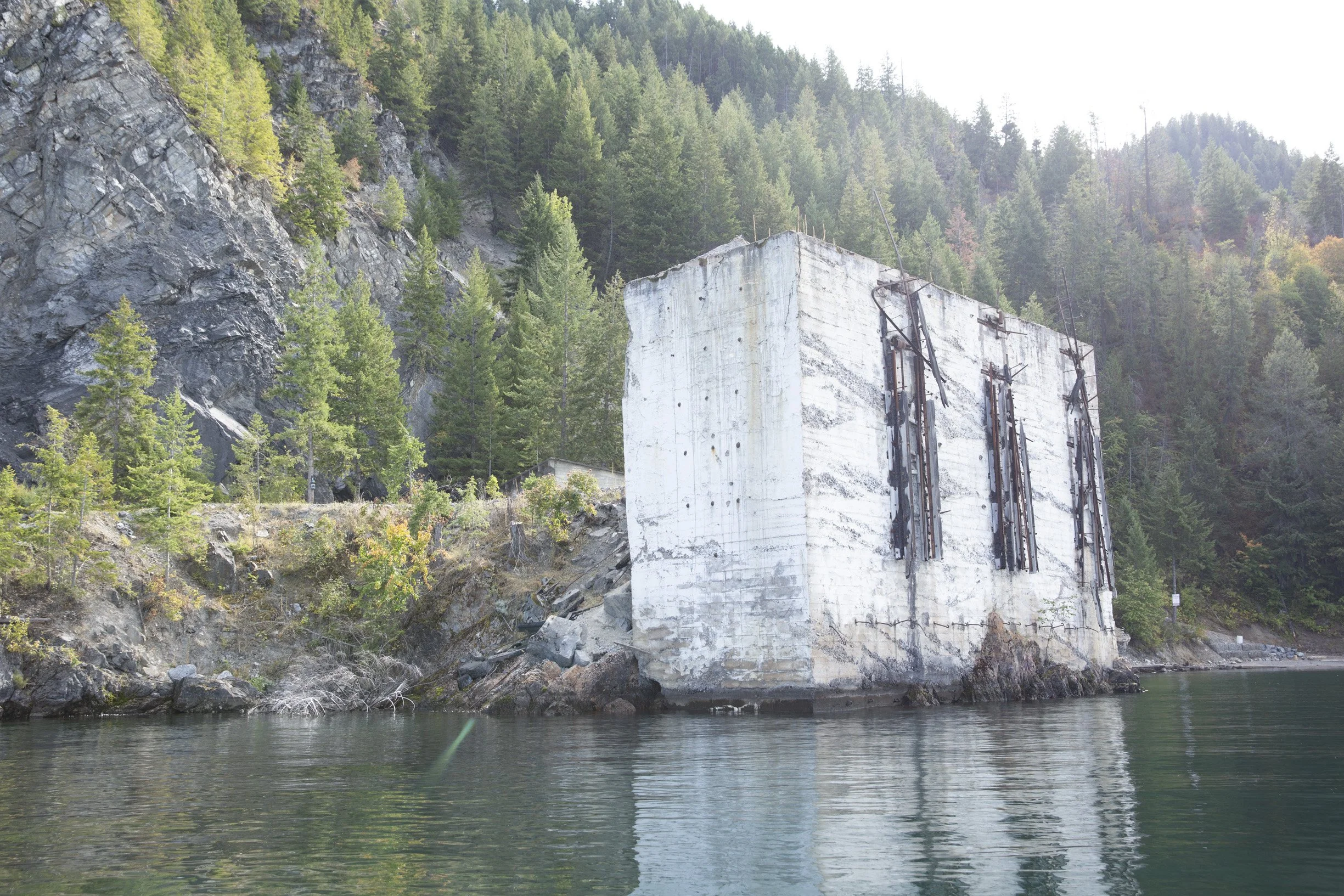
Most successful mine in Bonner County with historic remnants. Mooring buoy and primitive camping; no other amenities. Beware poison ivy on shoreline.
History
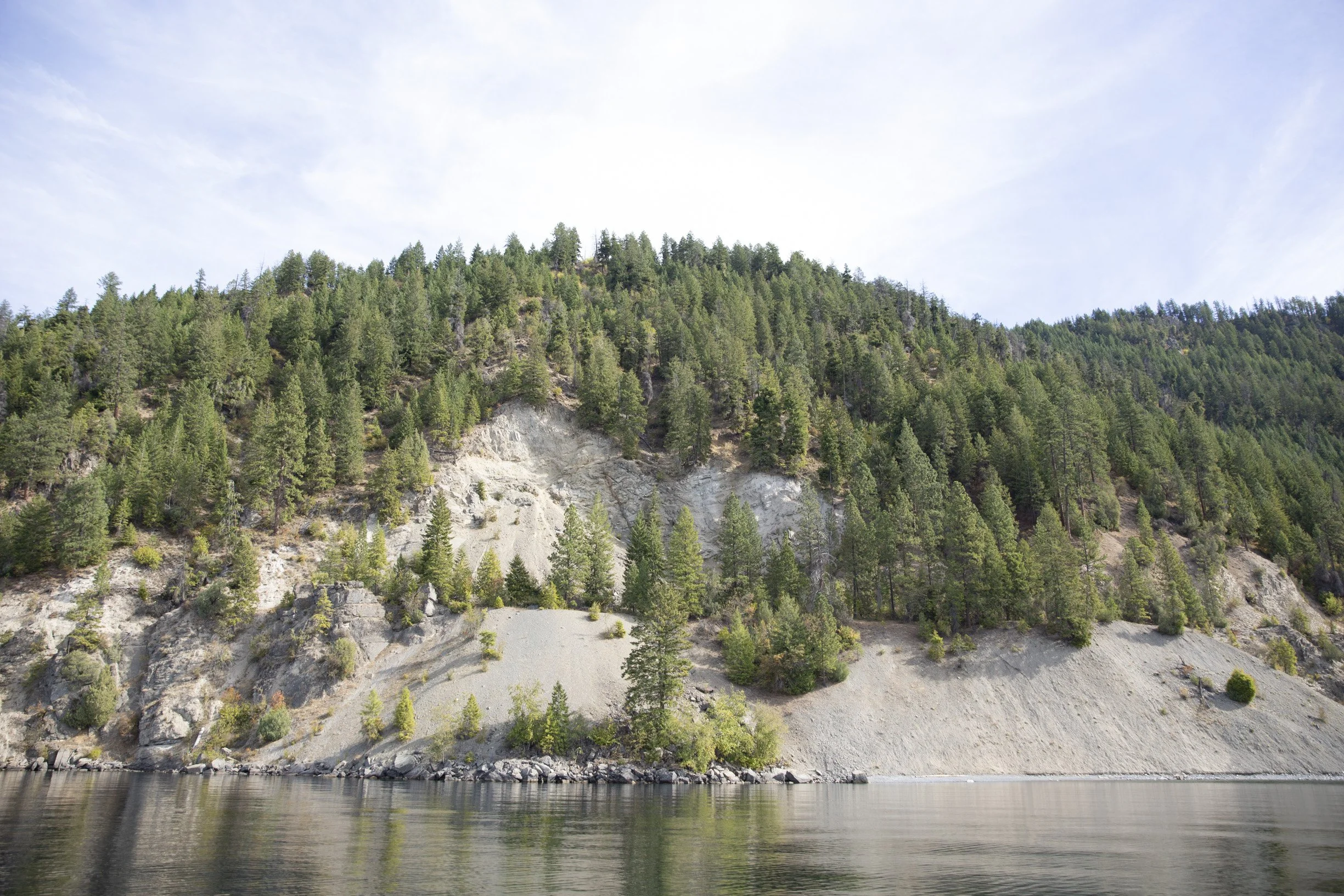
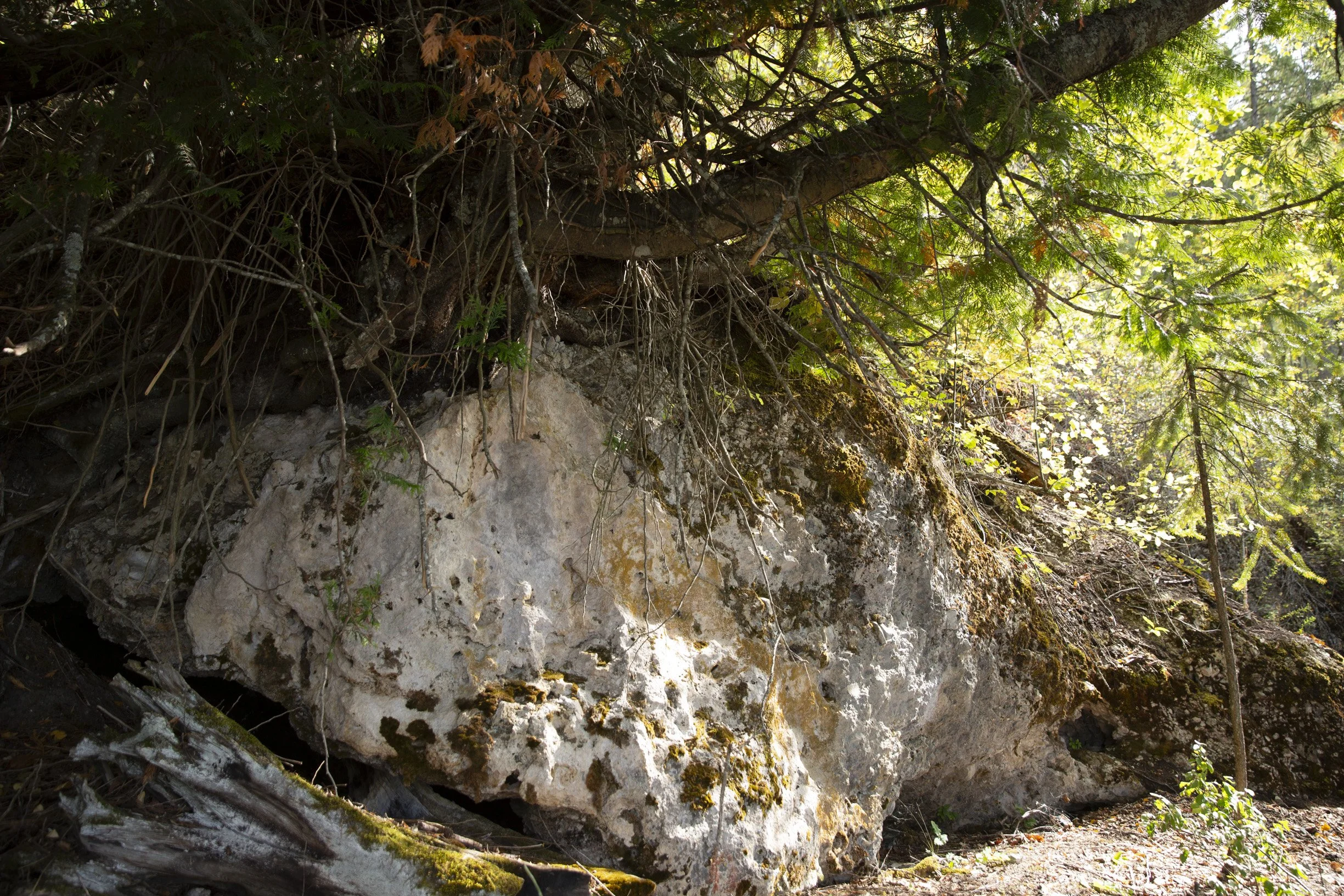
Major limestone deposits at the south end of the lake, both at Lakeview and Bayview, attracted miners who staked claims on the east side of the lake in the fall of 1881. These limestone deposits were the remains of fossil invertebrates that lived in a Cambrian sea almost 550 million years ago. Limestone was probably the first mineral to be commercially exploited in the region, and the impact of its development over the next six decades reached far beyond the shores of the lake. The industry grew from small, individual lime kilns into a large lime works at Bayview, and two cement processing plants at Lakeview. It spawned the development of related businesses, encouraged the extension of transportation networks, and influenced the drawing of political boundaries, while the materials produced contributed to the built environment of the entire region.
International Portland Cement Company built a crushing plant in 1912 at the Blue Slide lime placer just north of Lakeview. After preliminary processing, the crushed limestone was shipped on barges to Bayview and then by rail to Irvin, an industrial area east of Spokane. By 1917, the quarry employed 60 men. In 1919, the company opened a new quarry west of Lakeview and constructed a second crushing plant along the south shore. Within a year, the two plants were turning out 500 tons of limestone rock each day. The boom did not last, however, and the Great Depression brought construction nationwide to a standstill. International Portland Cement Co. had abandoned all operations at Lakeview by 1931.
Get directions: